Korean Conjugation Chart - Learn and practice korean conjugations with our fun and simple quiz app. Web korean verbs are relatively simple to conjugate once you know the verb stems along with the verb endings of the different tenses. 형님 = formal version of 형. 그 사람은 저의 형 입니다 = that person is my brother형 을 왜 때렸어요? Korean conjugation isn’t limited to verbs. Web 만나다 (to meet) these are regular verbs as they can be easily conjugated using the different korean verb conjugations. 6.2 korean present tense verbs list. Korean verb conjugations determine the tense, mood, and context of sentences. Web here is a summary list of commonly used korean verb tenses complete with examples for beginners. Web the common korean verb conjugation is the use of 아요 (ayo) and 어요 (eoyo), which gives the korean verb its polite and present tense form.

Korean Irregular Verbs Conjugation Chart
The present, present continuous, past and future. Web korean verbs are relatively simple to conjugate once you know the verb stems along with the verb.
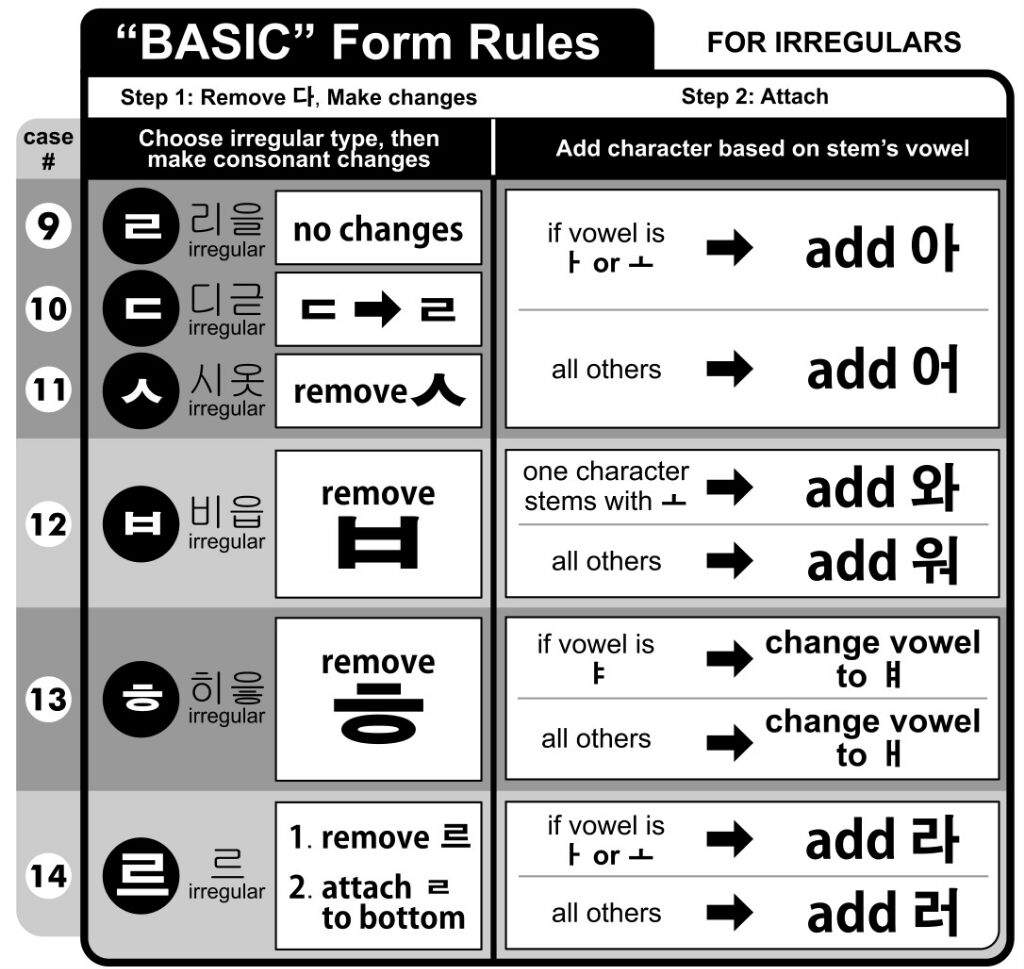
Basic verb conjugation (irregular verbs) Korean School Amino
그 사람은 저의 형 입니다 = that person is my brother형 을 왜 때렸어요? This also applies to korean adjectives. 6.3 korean past tense verbs.

Korean verb conjugation
Korean verbs are no different. Korean conjugation isn’t limited to verbs. So, when you learn how to properly conjugate verbs, your korean language comprehension is.
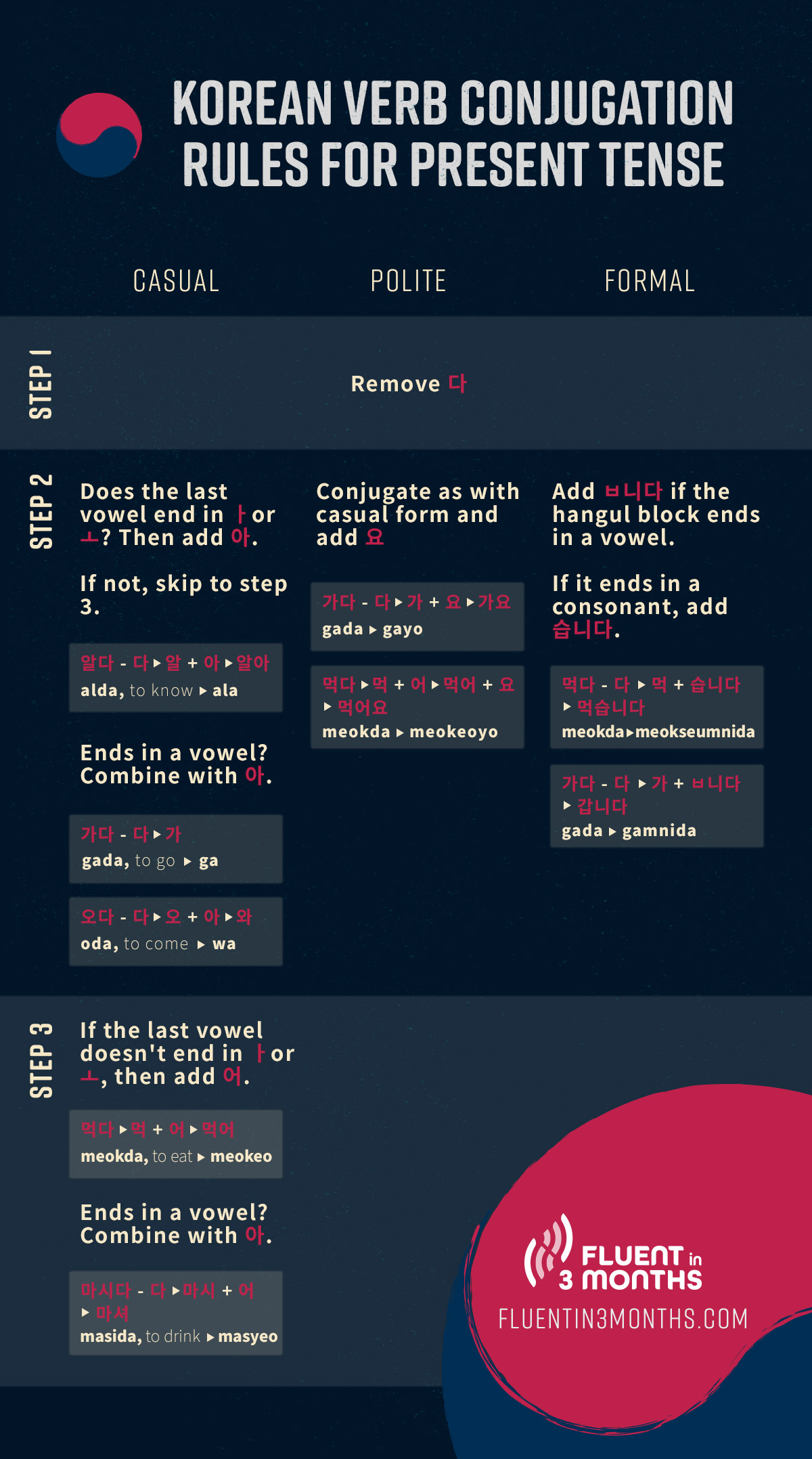
Korean Verb Conjugation Chart
형님 = formal version of 형. 6.2 korean present tense verbs list. It’s intuitive, beautifully designed and free to download. The present, present continuous, past.
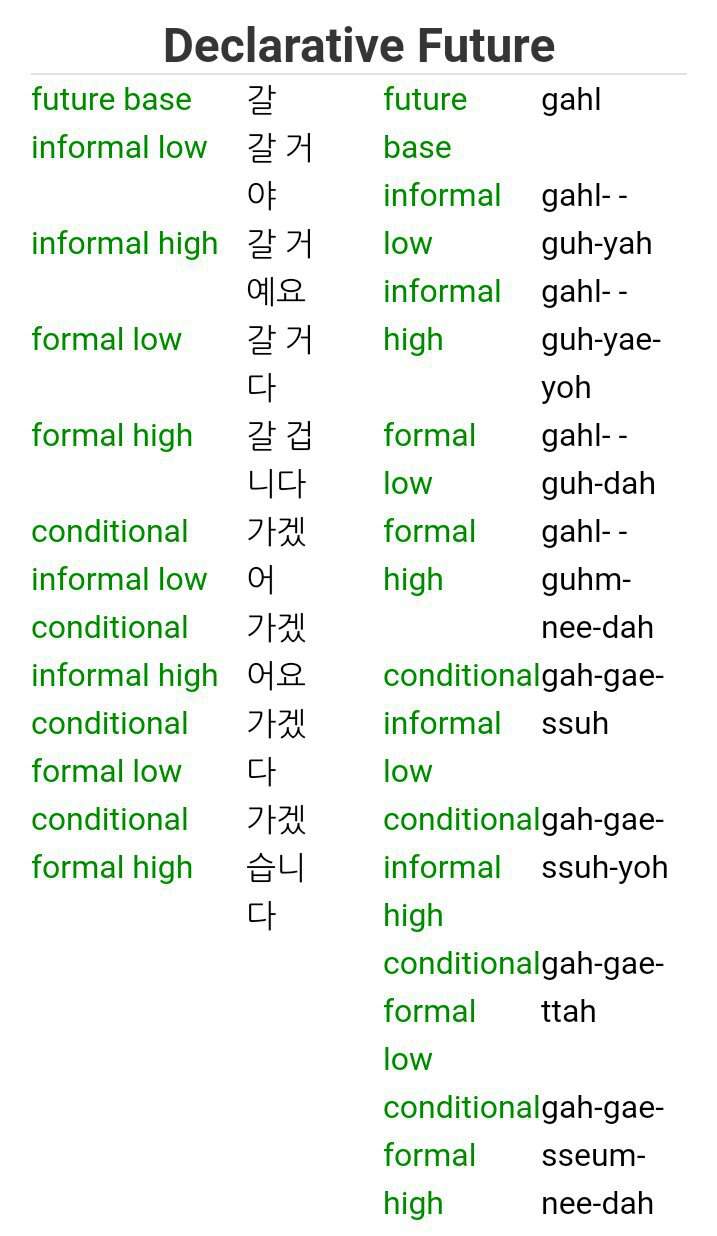
Korean verb conjugation Korean Language Amino
Web get “korean verbs” free pdf guide. How to conjugate korean verbs: 6.1 how to conjugate korean verbs. For example, the tables show what happens.
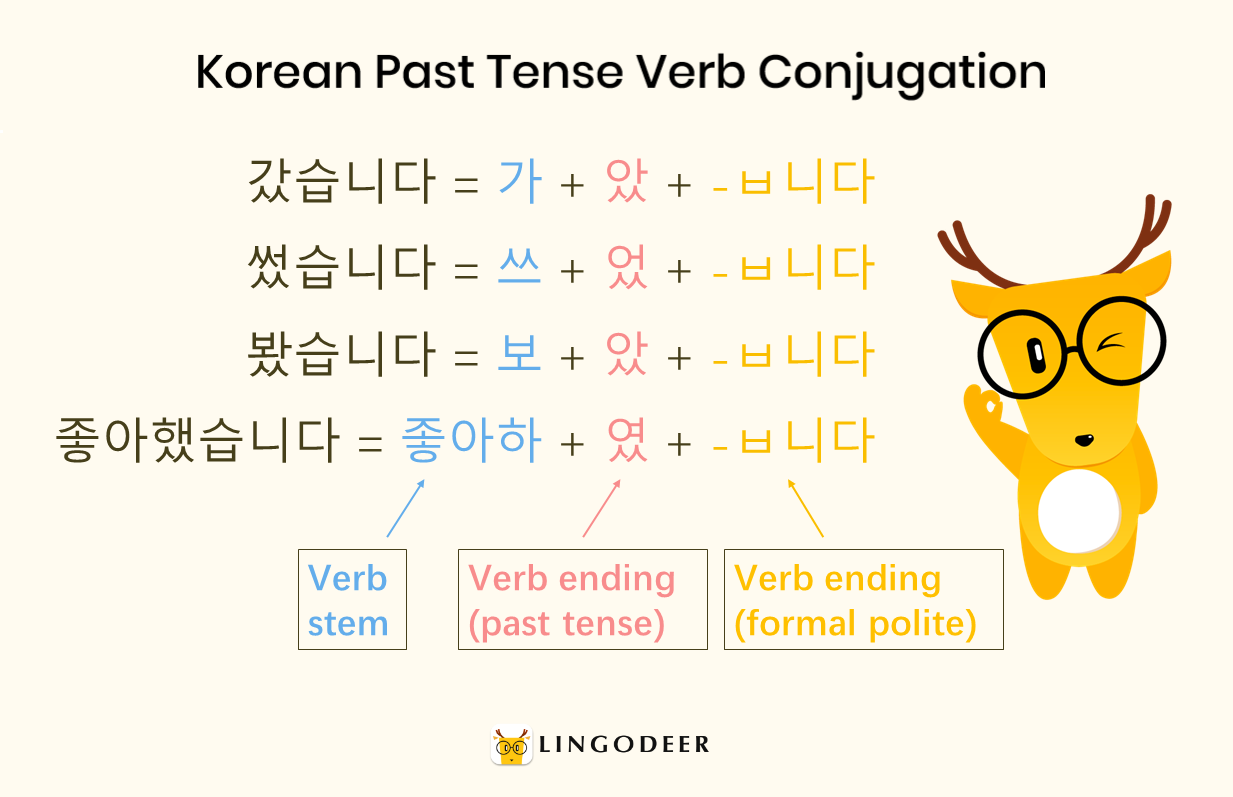
Korean Verb Conjugation Chart
How to conjugate korean verbs: This word is only used if the younger person is a female. 저는 가요 (i go) we’ve added 저는 (“i”).
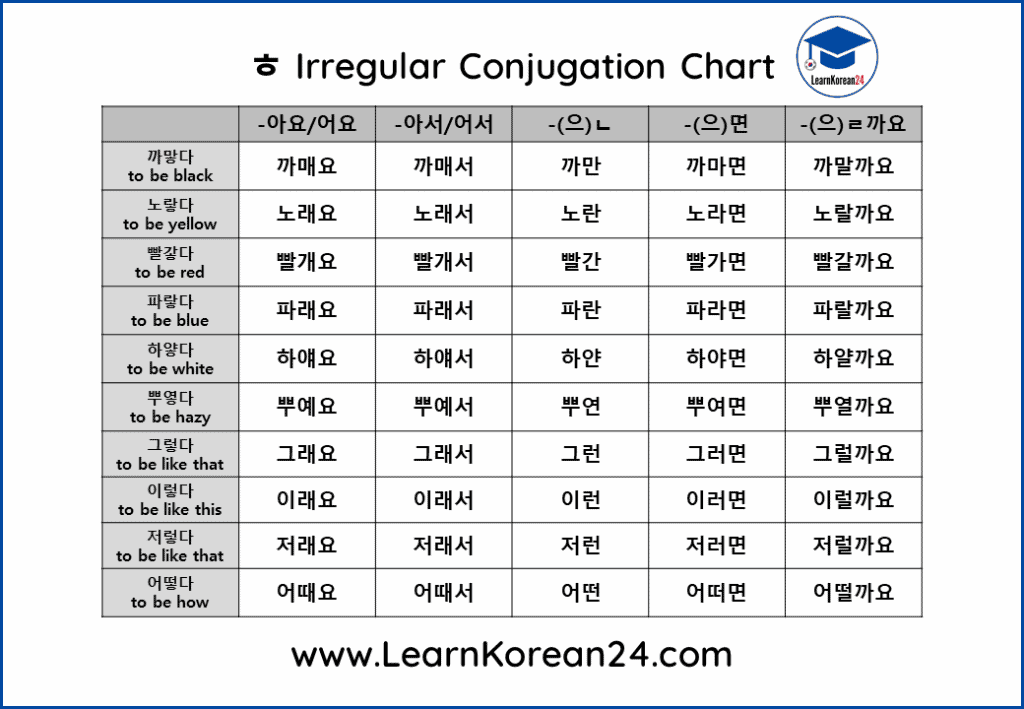
Irregular Korean Verbs With ㅎ (ㅎ 불규칙) LearnKorean24
Web how to add ~여요. Instead, verb conjugations depend upon the verb tense, aspect, mood, and the social relation between the speaker, the subjects, and.
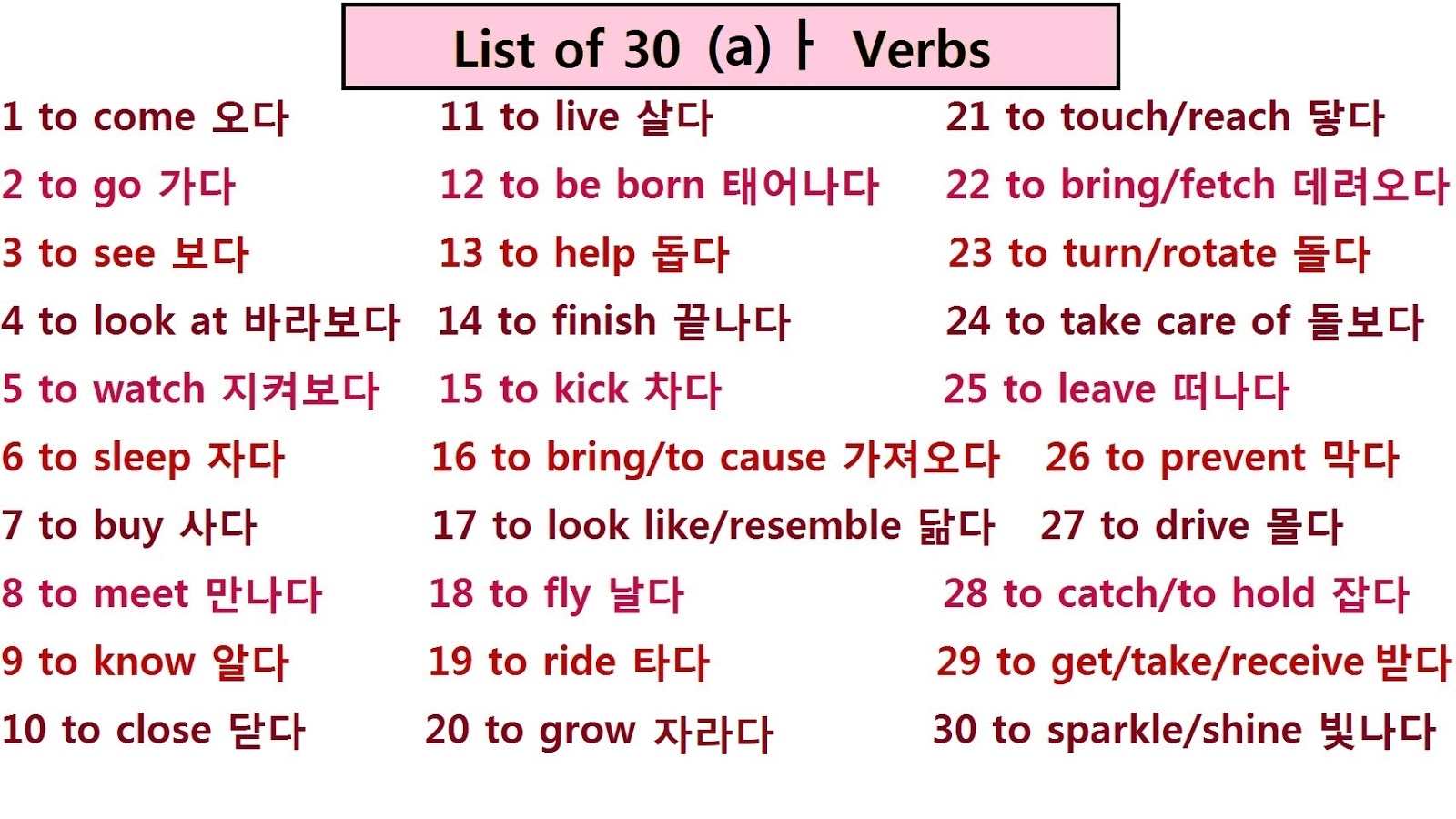
Korean Verb Conjugation Chart
Korean verbs are no different. Instead, verb conjugations depend upon the verb tense, aspect, mood, and the social relation between the speaker, the subjects, and.
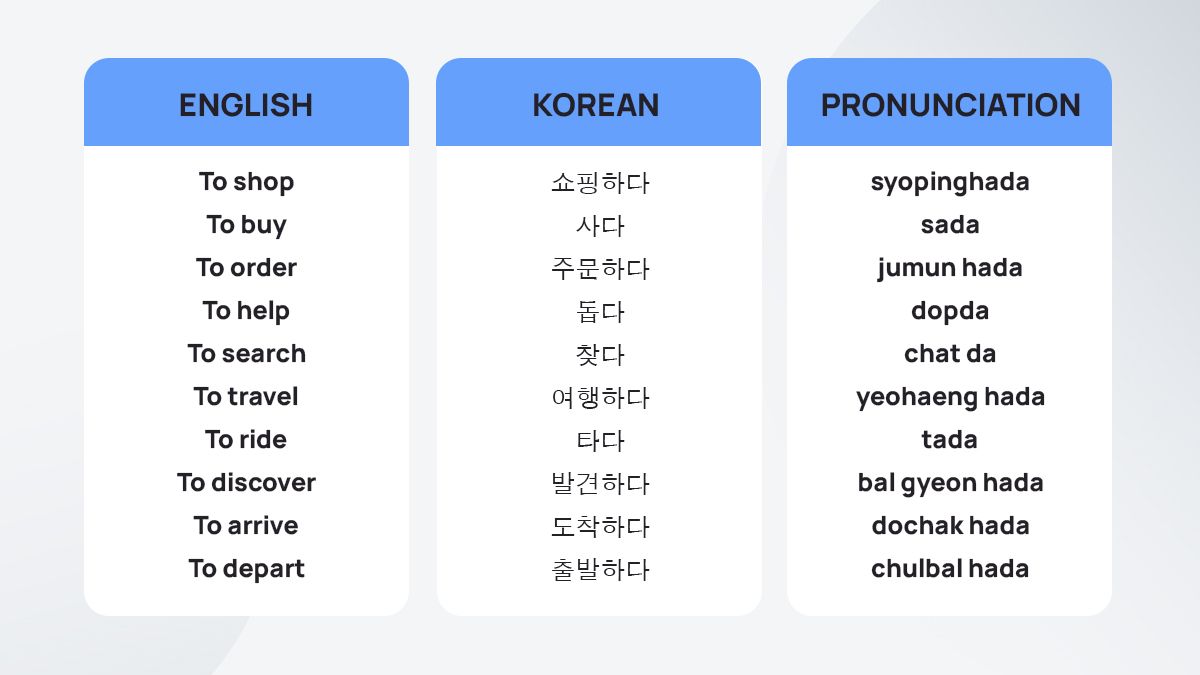
A Guide to Korean Verbs for Beginners
Other parts of speech such as adjectives can be conjugated. For example, the tables show what happens to verbs when ~ (으)시 ( lesson 39).

Korean Verbs When and How Are They Conjugated?
Web here is a summary list of commonly used korean verb tenses complete with examples for beginners. Contents [ hide] 1 korean verbs. Want this.
Korean Conjugation Isn’t Limited To Verbs.
So, when you learn how to properly conjugate verbs, your korean language comprehension is enhanced. In this article, we will learn how to determine the stem of a verb and how to add the appropriate endings to make them into past, present, or future tenses. Other parts of speech such as adjectives can be conjugated. Korean verb conjugations determine the tense, mood, and context of sentences.
We Add 여요 To Verbs And Adjectives That End In 하다, And In Everyday Speech, We Use The Contracted Forms.
By learning korean verbs and how they are used in sentences, you will understand how objects are clarified in sentences. An important aspect of korean conjugation; Sentences must contain verbs in order to be complete. No matter what language you’re learning, you have to master your verbs to express what you’re doing.
It’s Easy To Switch Between Honorific And Regular Forms, And Conjugations Are Organized By Type, Tense, And Formality So You Can Find The Conjugation You’re Looking For With Ease.
Web in this article, we’ll teach you basic korean verb conjugation, including how to change verbs in the past, present, and future tense, and for different politeness levels. Korean irregular verbs are known as 불규칙 동사. 저는 가요 (i go) we’ve added 저는 (“i”) as the subject, and then conjugated 가다 (to go). Web here is a summary list of commonly used korean verb tenses complete with examples for beginners.
Web Korean Verbs Are Relatively Simple To Conjugate Once You Know The Verb Stems Along With The Verb Endings Of The Different Tenses.
However, unlike in any other language, korean grammar takes conjugation to another level. Web table of contents. 저의 형 은 똑똑한 남자입니다 = my brother is a smart man. This also applies to korean adjectives.