Imperfect Spanish Chart - We have some good news for you: Example of preterite vs imperfect. The imperfect tense is generally used for actions in the past that do not have a definite end. Web how to form the imperfect tense. So, keep reading this comprehensive guide to understanding and using the. Web since it’s crucial for your communication, in this guide, you’ll learn when to use and how to conjugate imperfect verbs in spanish. It is used to talk about ongoing past actions, habitual actions in the past, and lasting personal qualities or conditions. Web conjugate spanish verbs with our conjugator. Using the imperfect to talk about the past. Web learning to use each spanish structure, such as the “imperfect conjugation,” will help you build a strong foundation in spanish verb conjugation.
Regular Imperfect Tense Verbs Spanish Chart
It is used when talking about what time it was in the past, moods/feelings/and emotions in the past, someone’s age in the past, etc. The.
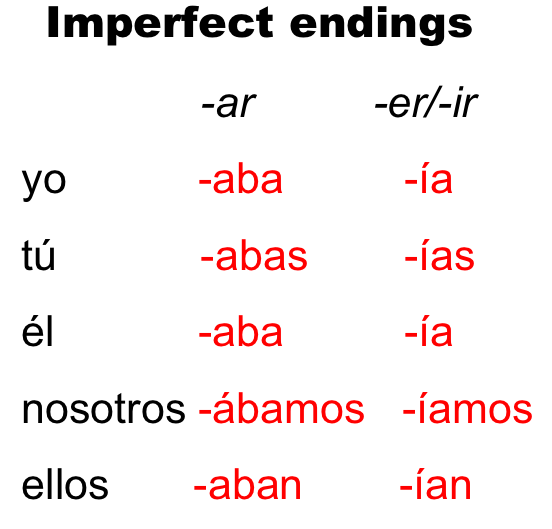
Imperfect Study Spanish
So, keep reading this comprehensive guide to understanding and using the. The imperfect tense (indicative mood) Web learning to use each spanish structure, such as.
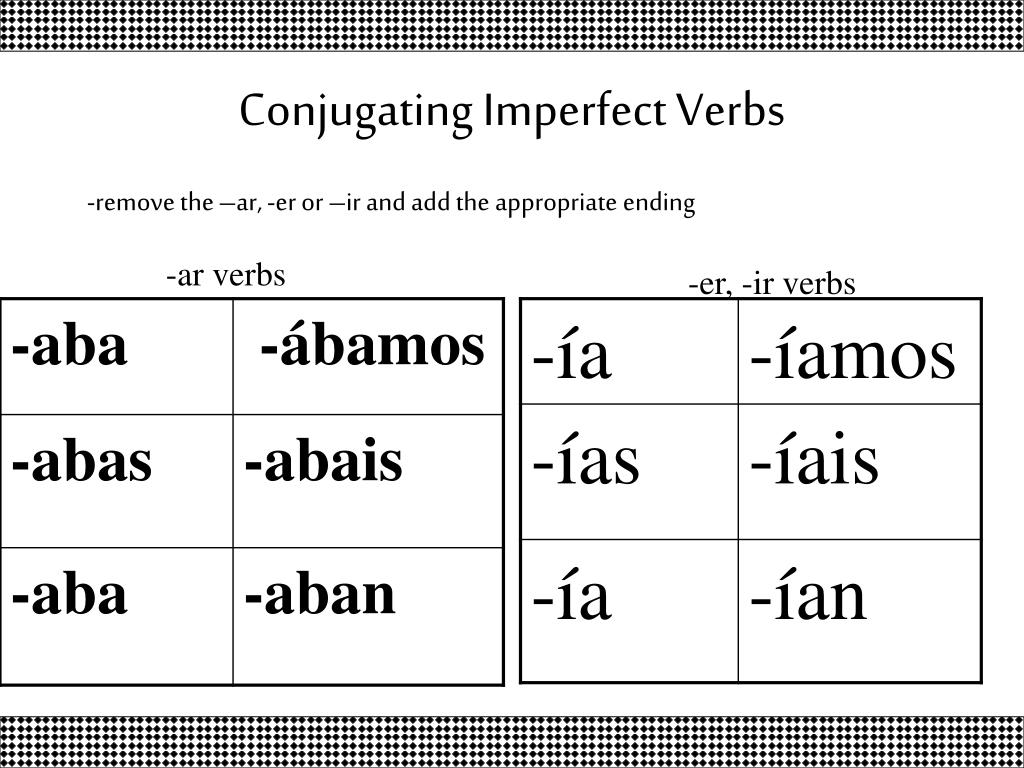
Spanish Ar Er Ir Chart
It can also be used to talk about: Web learn how to speak about the past. There are just three verbs that are totally irregular.
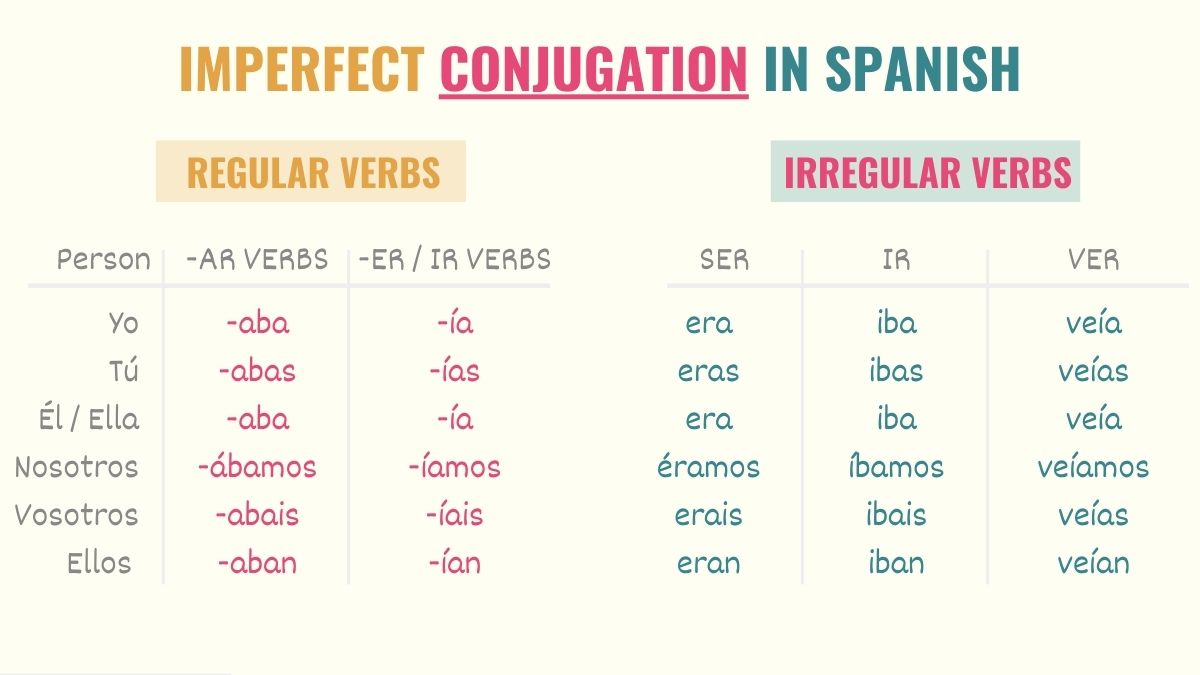
Spanish Imperfect Tense 101 Uses, Examples & Conjugations
So, keep reading this comprehensive guide to understanding and using the. Actions that were repeated habitually; We use it to describe a past situation, habit,.
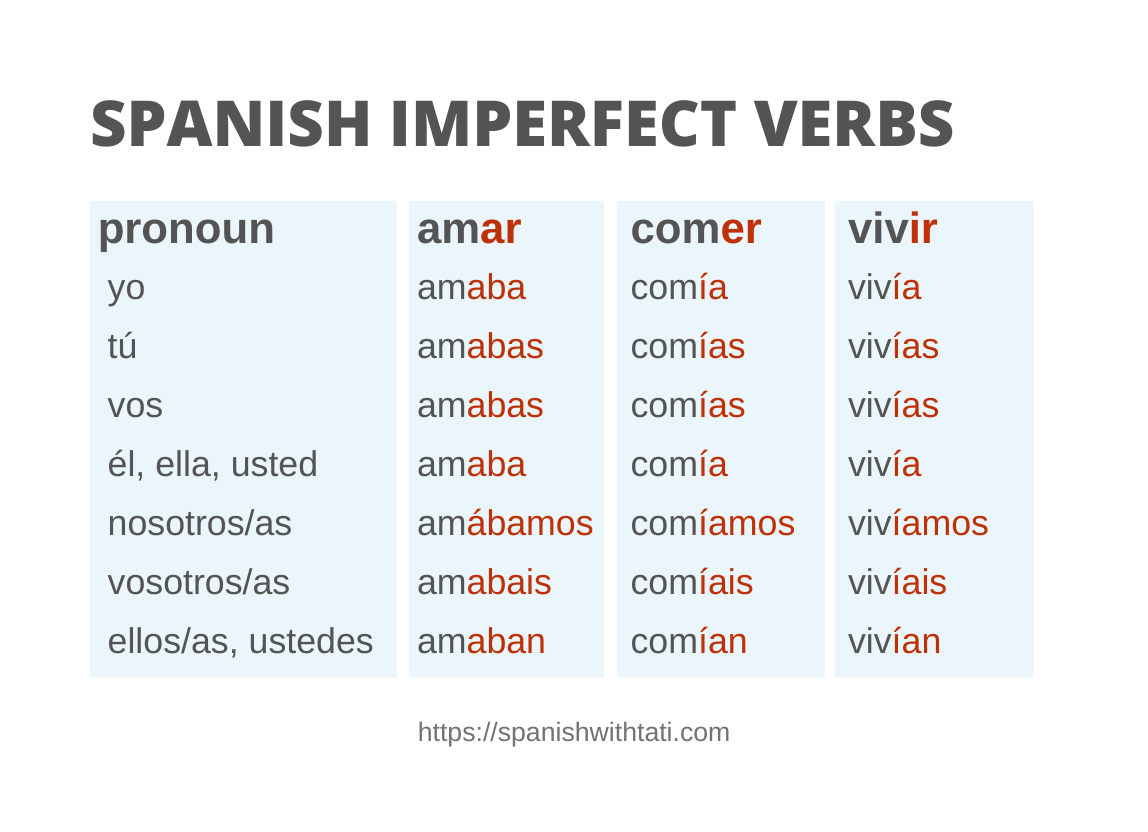
Spanish Imperfect Verbs List of Conjugated Verbs Spanish with Tati
The topics we’ll cover include: Web conjugations charts for all spanish verb tenses and moods — yes, even the ones that no one even uses…not.

When to Use the Imperfect Tense in Spanish TPR Teaching
Words used with spanish imperfect; Web let me show you today how straightforward the imperfect tense is and how quickly you can master it. The.
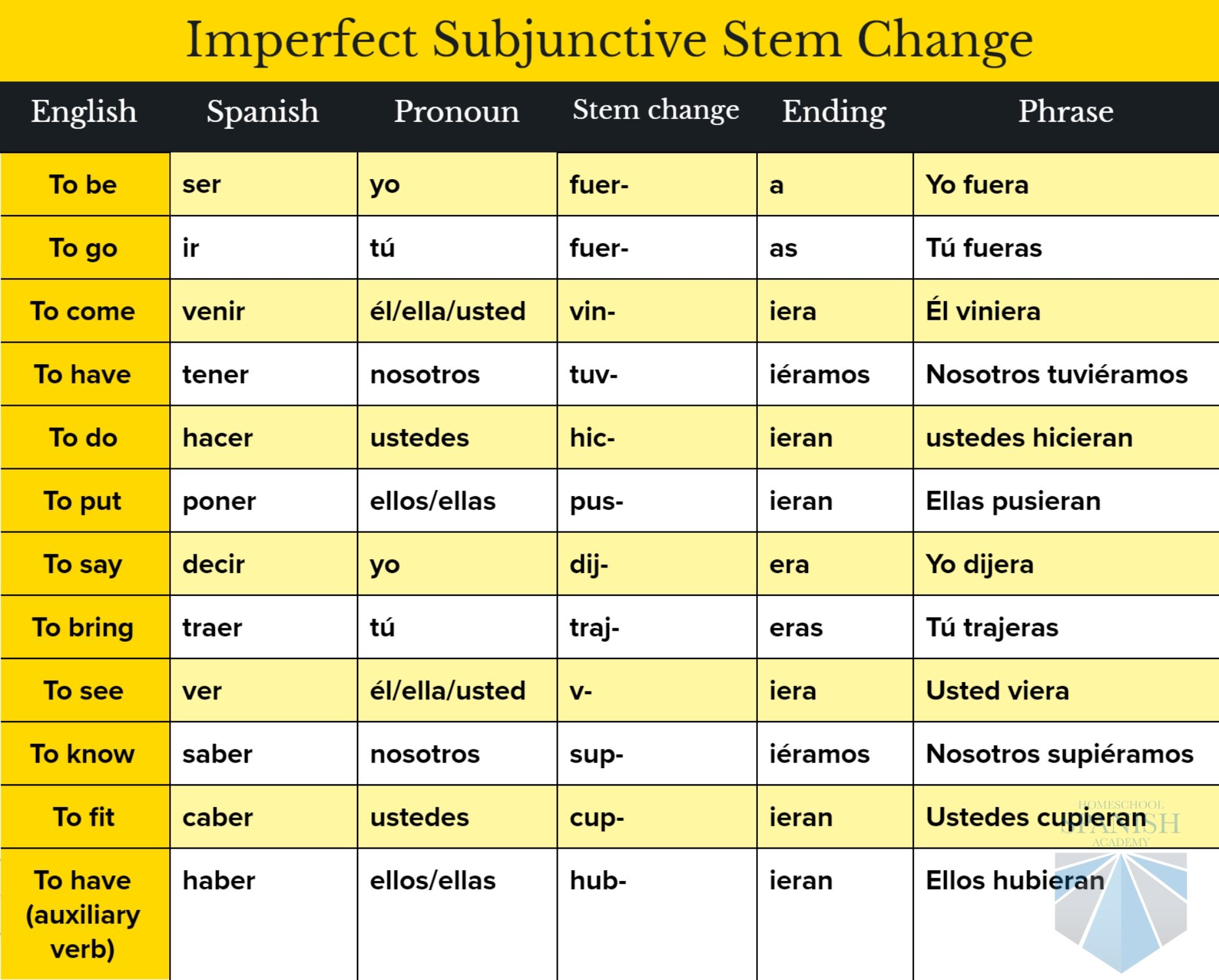
Imperfect Conjugation Chart Spanish
Web the preterite tells you precisely when something happened in the past, while the imperfect tells you in general terms when an action took place.

Imperfect Tense Conjugation Charts for 20 Regular Verbs Light On Spanish
Verb conjugations include preterite, imperfect, future, conditional, subjunctive, and more tenses. Present tense, imperfect, preterite (past tense), conditional, subjunctive, imperative (commands), perfect tenses. Web so,.
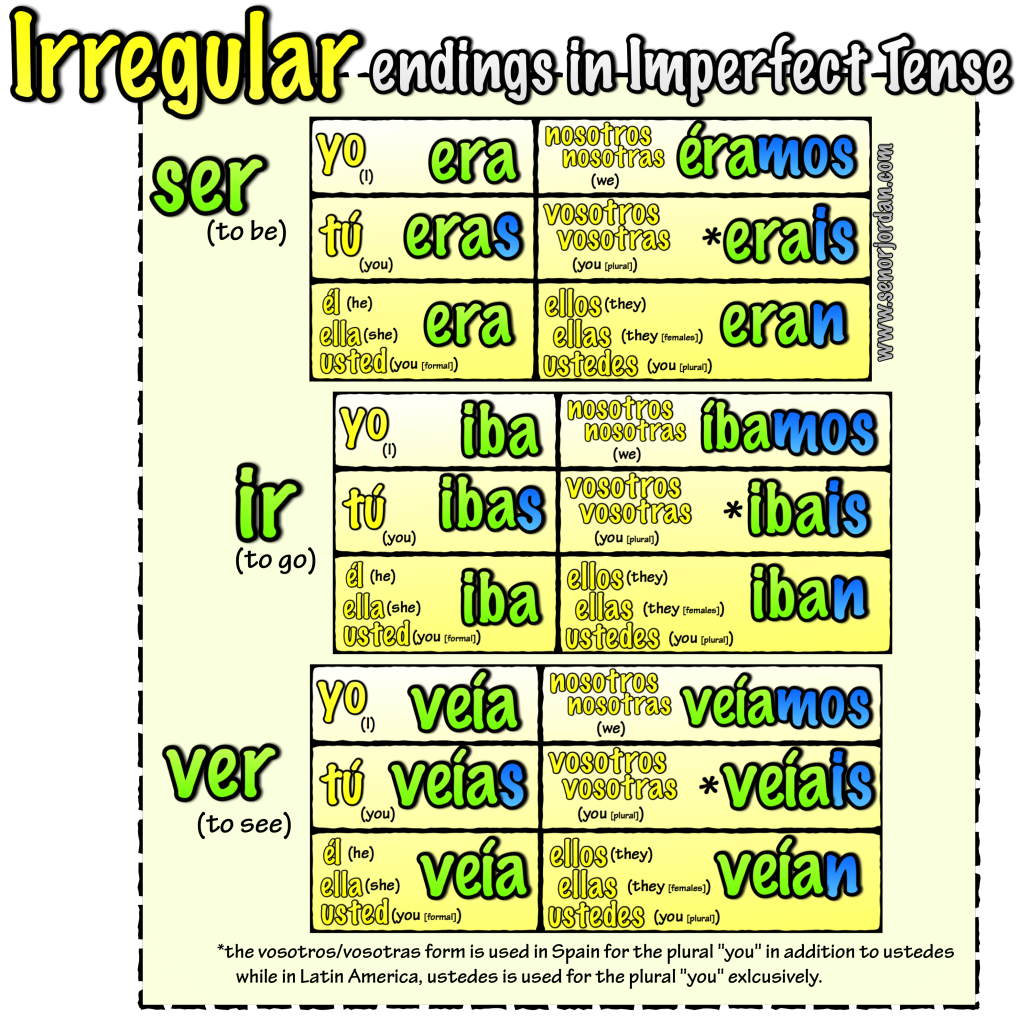
Imperfect Tense Spanish Chart
The imperfect tense (indicative mood) Words used with spanish imperfect; Web we use the pretérito imperfecto (imperfect tense) in spanish to provide descriptions about something.
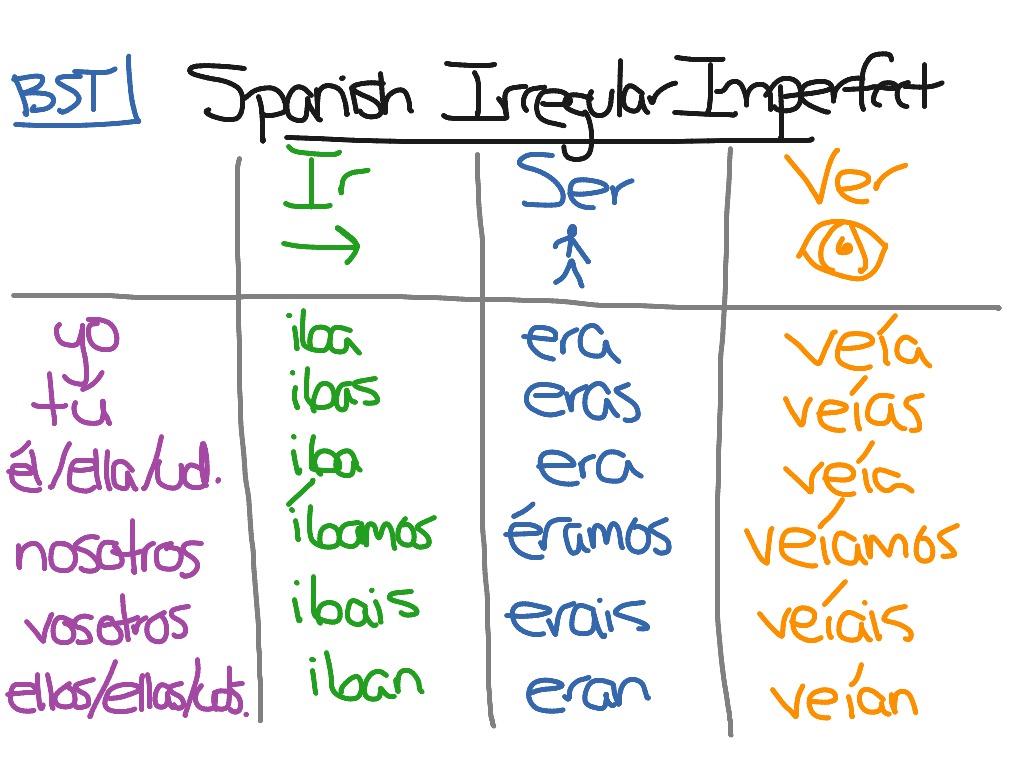
Spanish Imperfect Verb Table
Web the imperfect indicative (pretérito imperfecto de indicativo) is a spanish past tense. We cover conjugations for regular and irregular verbs, key uses of the.
These Can Be Actions That Are Not Yet Completed Or Refer To A Time In General In The Past.
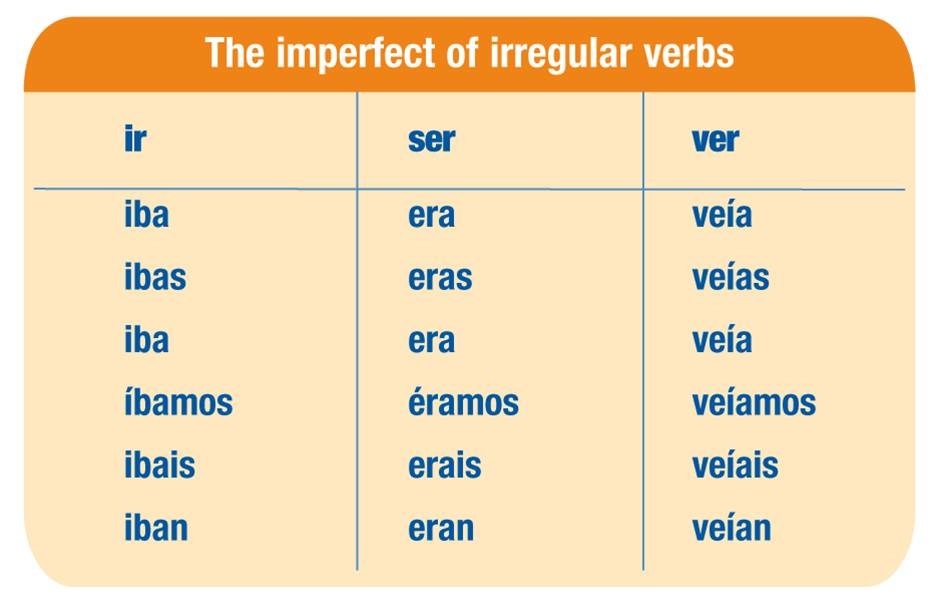
The imperfect tense is generally used for actions in the past that do not have a definite end. The irregular verbs in the imperfect are ir (to go), ser (to be), and ver (to see). In this article, you’ll see when to use it, how to form it, and learn all three (there are only three!) irregular imperfect verbs. Describe what things were like in the past.
Used To Express An Action That Was Continuous In The Past.
Web the spanish imperfect is relatively easy to conjugate. Conjugations for well over 1000 spanish verbs. Example of preterite vs imperfect. There are just three verbs that are totally irregular in the imperfect!
Web Guide To The Spanish Imperfect Tense.
Used to express an action that was continuous in the past and its completion is not indicated. Web since it’s crucial for your communication, in this guide, you’ll learn when to use and how to conjugate imperfect verbs in spanish. It can also be used to talk about: The imperfect tense (indicative mood)
Differentiate Between The Imperfect And Preterite Tenses, Using The Imperfect For Ongoing Actions Or States In The Past And The Preterite For Completed Actions In The Past.
Web in spanish, there are only three irregular verbs in the imperfect tense (verbos irregulares en el pretérito imperfecto): We use it to describe a past situation, habit, or an action interrupted by another action. Web the preterite tells you precisely when something happened in the past, while the imperfect tells you in general terms when an action took place with no definite ending. Actions that were repeated habitually;